
Kation Alil - Langkah-Langkah Kimia

Organic chemistry is a fascinating field that delves into the structure, properties, and reactions of carbon-containing compounds. Among the many concepts that students encounter, conjugated systems and allylic carbocations play a crucial role in understanding reaction mechanisms and stability. These topics are not only fundamental to organic chemistry but also have significant implications in various industries, including pharmaceuticals, materials science, and biochemistry. Whether you're a student preparing for an exam or a researcher exploring new chemical pathways, mastering these concepts can open up a world of possibilities.
Conjugated systems refer to molecules where alternating single and double bonds allow for the delocalization of electrons. This phenomenon leads to increased stability and unique reactivity patterns. Allylic carbocations, on the other hand, are positively charged species that form adjacent to a double bond, making them highly reactive and important intermediates in many organic reactions. Understanding how these systems behave under different conditions is essential for predicting reaction outcomes and designing efficient synthetic routes.
The study of conjugated systems and allylic carbocations often involves exploring resonance structures, electrophilic addition reactions, and the distinction between kinetic and thermodynamic control. Additionally, the Diels-Alder reaction and other cycloaddition processes provide valuable insights into the behavior of conjugated dienes. As you delve deeper into these topics, you'll find that they are interconnected with other areas of organic chemistry, such as nucleophilic substitution, elimination reactions, and stereochemistry. By building a strong foundation in these areas, you can tackle more complex problems and gain a comprehensive understanding of organic chemical behavior.
Understanding Conjugated Systems
Conjugated systems are molecular structures where there is an alternating pattern of single and double bonds, allowing for the delocalization of pi electrons. This delocalization results in a stabilization effect known as resonance energy, which makes conjugated systems more stable than their non-conjugated counterparts. One of the most common examples of a conjugated system is 1,3-butadiene, where the four carbon atoms are connected by two double bonds and one single bond. The ability of the pi electrons to move freely across the entire molecule contributes to its overall stability and reactivity.
In conjugated systems, the concept of resonance is crucial. Resonance structures represent different ways of distributing the pi electrons within the molecule, and each structure contributes to the overall hybrid structure. For example, in 1,3-butadiene, there are two major resonance contributors, each showing the movement of the pi electrons between different positions. This delocalization not only stabilizes the molecule but also influences its chemical reactivity. Conjugated systems are particularly important in electrophilic addition reactions, where the presence of multiple pi bonds allows for the formation of different products depending on the reaction conditions.
Another key aspect of conjugated systems is their role in the formation of allylic carbocations. When a conjugated diene undergoes electrophilic addition, the resulting carbocation can be stabilized through resonance. This stabilization is due to the ability of the positive charge to be delocalized over multiple carbon atoms, making the intermediate more stable. This concept is central to understanding the mechanism of various organic reactions, including the 1,2 and 1,4 additions to conjugated dienes. The stability of the carbocation intermediate determines the outcome of the reaction, whether it follows kinetic or thermodynamic control.
In addition to their importance in reaction mechanisms, conjugated systems also play a vital role in spectroscopy. Techniques such as UV-Vis spectroscopy can be used to analyze the electronic transitions in conjugated molecules, providing valuable information about their structure and properties. The absorption of light by conjugated systems is related to the extent of electron delocalization, making it a useful tool for identifying and characterizing these compounds. Overall, the study of conjugated systems is essential for understanding the behavior of organic molecules and their interactions with other substances.
Allylic Carbocations and Their Stability
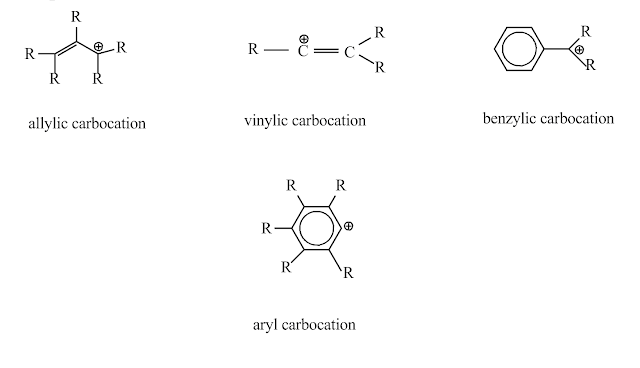
Allylic carbocations are positively charged species that are formed when a carbocation is adjacent to a double bond. This positioning allows for the delocalization of the positive charge through resonance, significantly increasing the stability of the carbocation. The ability of the positive charge to be spread out over multiple carbon atoms makes allylic carbocations more stable compared to primary or secondary carbocations. This increased stability is a critical factor in determining the reactivity and selectivity of various organic reactions.
The stability of allylic carbocations can be further enhanced by the presence of adjacent alkyl groups, which donate electron density through inductive effects. This electron donation helps to stabilize the positive charge, making the carbocation more favorable in reaction conditions. Additionally, the possibility of forming multiple resonance structures contributes to the overall stability of the intermediate. For instance, in the case of a simple allylic carbocation like the 1-propenyl cation, the positive charge can be delocalized between the two terminal carbon atoms, leading to a more stable structure.
Understanding the stability of allylic carbocations is essential for predicting the outcomes of electrophilic addition reactions. When a conjugated diene reacts with an electrophile, the formation of an allylic carbocation is often a key step in the reaction mechanism. Depending on the reaction conditions, the carbocation can either proceed through a 1,2-addition or a 1,4-addition pathway. The choice between these pathways is influenced by the stability of the resulting carbocation and the nature of the solvent and temperature involved. In some cases, the reaction may follow kinetic control, where the faster-forming product is favored, while in others, thermodynamic control may lead to the formation of the more stable product.
The concept of allylic carbocations is closely linked to the broader topic of conjugated systems and their reactivity. The interplay between the stability of the carbocation and the electronic environment of the molecule determines the overall reaction pathway. This relationship is particularly evident in the Diels-Alder reaction, where the formation of a conjugated diene and a dienophile leads to the creation of a six-membered ring. The stability of the intermediate carbocations formed during this process plays a crucial role in the success of the reaction.
Moreover, the study of allylic carbocations has practical applications in various fields, including pharmaceuticals and materials science. By understanding the factors that influence the stability of these intermediates, chemists can design more efficient synthetic routes and optimize reaction conditions. This knowledge is also valuable in the development of new drugs, where the stability of certain intermediates can impact the overall yield and purity of the final product.
In summary, allylic carbocations are a vital component of organic chemistry, offering insights into the mechanisms of various reactions and the factors that influence their outcomes. Their stability, determined by resonance and inductive effects, plays a significant role in determining the reactivity of conjugated systems. By mastering these concepts, students and researchers alike can gain a deeper understanding of organic chemical behavior and apply this knowledge to real-world applications.
Electrophilic Addition to Dienes
Electrophilic addition to dienes is a fundamental reaction in organic chemistry, particularly when dealing with conjugated dienes such as 1,3-butadiene. This type of reaction involves the attack of an electrophile on the diene, leading to the formation of a carbocation intermediate. The resulting carbocation can then react with a nucleophile, producing different products depending on the reaction conditions. Two primary pathways for electrophilic addition to dienes are the 1,2-addition and the 1,4-addition, each of which has distinct characteristics and outcomes.
The 1,2-addition occurs when the electrophile adds to the first and second carbon atoms of the diene, forming a new sigma bond between them. This pathway typically results in the formation of a more stable carbocation, as the positive charge is localized on a single carbon atom. However, the stability of the carbocation is influenced by the presence of adjacent alkyl groups, which can donate electron density through inductive effects. In contrast, the 1,4-addition involves the electrophile adding to the first and fourth carbon atoms of the diene, creating a new sigma bond that spans across the conjugated system. This pathway leads to the formation of a carbocation that is stabilized through resonance, allowing the positive charge to be delocalized over multiple carbon atoms.
The choice between 1,2 and 1,4 addition is often dictated by the reaction conditions, such as temperature and solvent. At lower temperatures, the reaction tends to favor the 1,2-addition pathway, as it proceeds through a more stable intermediate. This is known as kinetic control, where the reaction rate is determined by the stability of the transition state. On the other hand, at higher temperatures, the reaction may shift towards the 1,4-addition pathway, which is governed by thermodynamic control. In this case, the reaction favors the formation of the more stable product, even if it requires a higher activation energy.
The stability of the carbocation intermediate is a critical factor in determining the outcome of electrophilic addition to dienes. Allylic carbocations, which are stabilized by resonance, are particularly important in this context. The ability of the positive charge to be delocalized over multiple carbon atoms enhances the stability of the intermediate, making it more likely to form under appropriate conditions. This concept is closely related to the broader principles of conjugated systems and their reactivity, as the presence of multiple pi bonds allows for the formation of various resonance structures.
In addition to their importance in reaction mechanisms, electrophilic addition to dienes has practical applications in various fields, including polymer chemistry and drug synthesis. The ability to control the addition pathway allows chemists to tailor the properties of the resulting products, making this reaction a valuable tool in organic synthesis. By understanding the factors that influence the outcome of electrophilic addition to dienes, chemists can develop more efficient and selective synthetic methods.
Overall, the study of electrophilic addition to dienes provides valuable insights into the behavior of conjugated systems and the factors that influence their reactivity. By mastering the concepts of 1,2 and 1,4 addition, students and researchers can gain a deeper understanding of organic chemical reactions and apply this knowledge to a wide range of applications.
Kinetic vs Thermodynamic Control in Electrophilic Addition
In the context of electrophilic addition to dienes, the distinction between kinetic and thermodynamic control is crucial for understanding the outcomes of these reactions. Kinetic control refers to the scenario where the reaction proceeds through the pathway that forms the product fastest, regardless of the stability of the final product. This is typically observed under conditions where the reaction is carried out at lower temperatures, as the activation energy required for the reaction is minimized. In such cases, the formation of the more stable intermediate, such as an allylic carbocation, is favored, leading to the 1,2-addition product.
On the other hand, thermodynamic control describes a situation where the reaction proceeds through the pathway that yields the most stable product, even if it requires a higher activation energy. This is usually observed at higher temperatures, where the system has enough energy to overcome the activation barrier associated with the less stable intermediate. Under these conditions, the reaction may favor the 1,4-addition pathway, as the resulting product is more stable due to the resonance stabilization of the carbocation intermediate.
The balance between kinetic and thermodynamic control is influenced by several factors, including the nature of the electrophile, the solvent, and the presence of catalysts. For instance, polar solvents can stabilize the carbocation intermediate, promoting thermodynamic control by facilitating the formation of the more stable product. Conversely, non-polar solvents may favor kinetic control by stabilizing the transition state, leading to the formation of the faster-reacting product.
The significance of this distinction lies in the ability to predict and manipulate the outcome of electrophilic addition reactions. By adjusting reaction conditions, chemists can control which pathway dominates, thereby influencing the types of products formed. This principle is particularly important in the synthesis of complex organic molecules, where the desired product may require specific structural features that can only be achieved through a particular reaction pathway.
Moreover, the concept of kinetic and thermodynamic control extends beyond electrophilic addition to dienes, playing a vital role in various other organic reactions. Understanding these principles enables chemists to design more efficient synthetic strategies and optimize reaction conditions for the production of target compounds. This knowledge is essential for both academic research and industrial applications, as it allows for the precise control of chemical reactions and the development of new materials and pharmaceuticals.
In conclusion, the interplay between kinetic and thermodynamic control in electrophilic addition to dienes highlights the complexity of organic reactions and the importance of controlling reaction conditions. By recognizing the factors that influence these pathways, chemists can harness the power of organic chemistry to create innovative solutions and advance scientific understanding.
Practice Problems and Solutions
To reinforce your understanding of conjugated systems and allylic carbocations, engaging in practice problems is essential. These exercises not only test your knowledge but also help you apply theoretical concepts to real-world scenarios. Below are a few examples of practice problems that cover the classification of carbocations, the formation of products in electrophilic addition reactions, and the mechanisms behind these processes.
Problem 1: Classifying Carbocations
Classify the following carbocations from the least to the most stable:
- Primary carbocation
- Secondary carbocation
- Tertiary carbocation
Solution: The stability of carbocations increases with the number of alkyl groups attached to the positively charged carbon. Primary carbocations, having only one alkyl group, are the least stable. Secondary carbocations, with two alkyl groups, are more stable than primary ones. Tertiary carbocations, which have three alkyl groups, are the most stable due to the increased electron-donating inductive effects and the ability to delocalize the positive charge through resonance.
Problem 2: Formation of Products in Electrophilic Addition
When the solution of the following bromide is heated up in ethanol, eight products (excluding elimination reactions) are formed. Draw plausible mechanisms to explain the formation of these isomers.
Solution: This problem involves the electrophilic addition of a bromide to a conjugated diene, leading to the formation of multiple isomers. The mechanism begins with the attack of the electrophile on the diene, forming an allylic carbocation. This carbocation can then react with the bromide ion through either 1,2 or 1,4 addition, depending on the reaction conditions. The formation of eight products suggests that multiple resonance structures and possible pathways exist, highlighting the complexity of the reaction.
Problem 3: Mechanism of Electrophilic Addition
Draw the mechanism for the electrophilic addition of HBr to 1,3-butadiene, considering both 1,2 and 1,4 addition pathways.
Solution: The mechanism starts with the protonation of the diene, forming a carbocation. This carbocation can then be attacked by the bromide ion, leading to the formation of either the 1,2 or 1,4 addition product. The stability of the carbocation intermediate determines the pathway taken. The 1,2 addition results in a more stable carbocation, while the 1,4 addition leads to a resonance-stabilized carbocation, which is more favorable under thermodynamic control.
By working through these practice problems, you can deepen your understanding of the concepts discussed and enhance your ability to apply them in various contexts. Engaging with these exercises not only reinforces your knowledge but also prepares you for more complex challenges in organic chemistry.
For those looking to expand their learning, resources such as online courses, textbooks, and study guides can provide additional insights and support. Joining a community of learners or seeking guidance from experienced educators can also be beneficial in navigating the complexities of organic chemistry. With consistent practice and a solid grasp of the underlying principles, you can confidently tackle the challenges of this fascinating subject. 😊
