

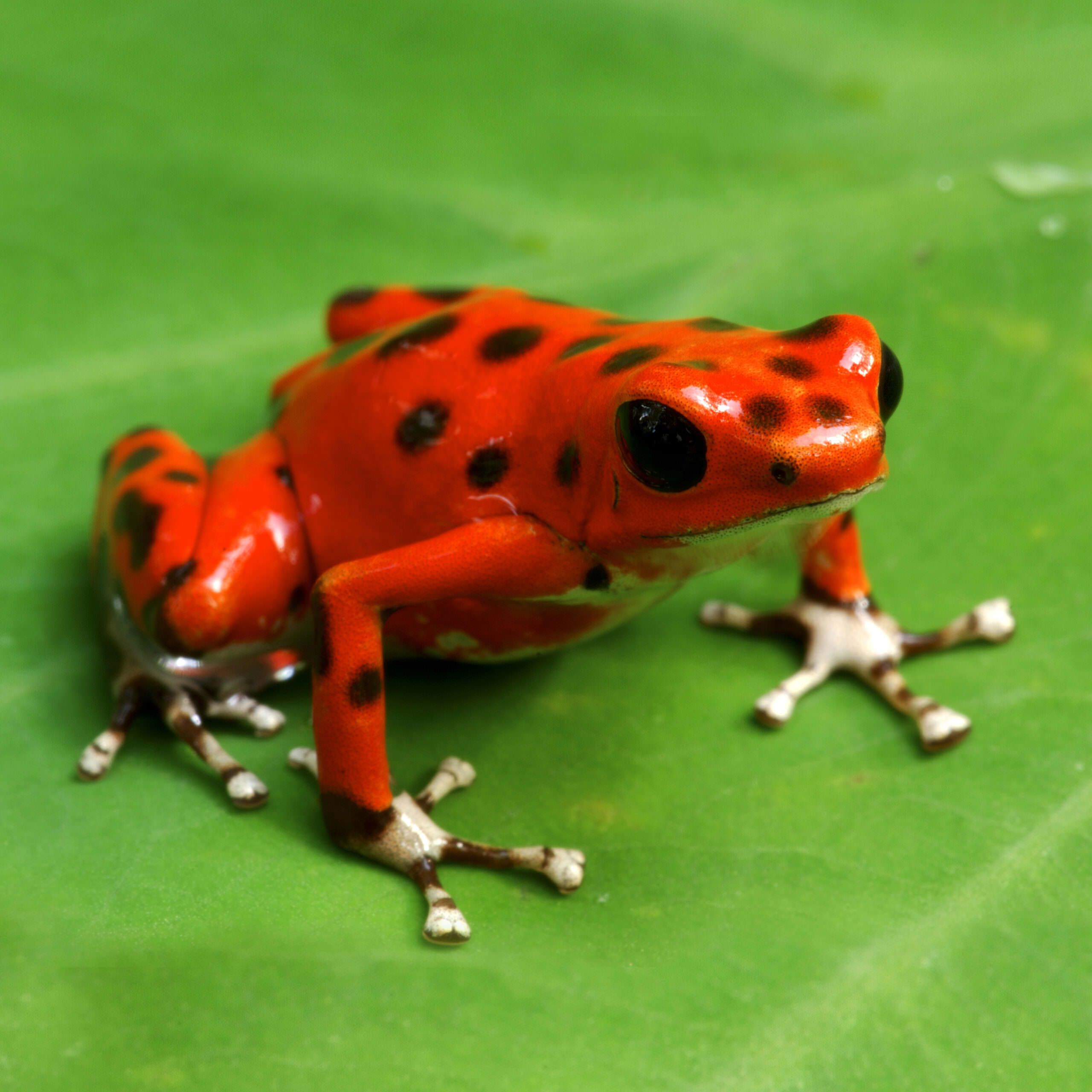
Poison dart frogs, known for their dazzling and often vivid coloration, are among the most captivating creatures found in the lush ecosystems of tropical rainforests. These small amphibians, typically no larger than two inches in length, have long fascinated scientists and nature enthusiasts alike due to their striking appearance and unique defense mechanisms. Their bright hues serve a critical purpose in survival, acting as a warning signal to potential predators. This phenomenon, known as aposematic coloration, is a key evolutionary adaptation that helps these frogs avoid being eaten by making them easily recognizable as dangerous or unpalatable.
The relationship between poison dart frogs and their environment is deeply intertwined, with their toxic properties playing a vital role in both ecological balance and human interaction. Some species, such as the golden poison frog, possess toxins so potent that they can be lethal to humans. Indigenous communities in regions like Colombia have historically used these toxins to coat their blowdarts for hunting, showcasing an ancient and intricate understanding of the natural world. The chemical compounds found in these frogs, including batrachotoxin, epibatidine, and histrionicotoxin, are not only fascinating from a biological standpoint but also hold significant potential for medical research.
Beyond their physical characteristics, poison dart frogs are also a subject of scientific interest due to the complex chemistry behind their toxins. Understanding the functional groups present in these compounds can provide valuable insights into organic chemistry and drug development. For instance, batrachotoxin and histrionicotoxin contain specific functional groups that contribute to their toxicity and biological activity. By studying these molecules, researchers can uncover new ways to develop medications that target neurological pathways or treat pain. As we explore the science behind these frogs, it becomes clear that their beauty is matched only by the complexity of their chemistry.
The Biology and Ecology of Poison Dart Frogs
Poison dart frogs belong to the family Dendrobatidae, which includes over 170 species distributed across Central and South America. These amphibians are primarily found in the humid, dense rainforests of the Amazon basin, where they thrive in the warm and moist conditions. Unlike many other frog species, poison dart frogs do not live in water for extended periods; instead, they spend most of their time on the forest floor or in low vegetation. Their small size and vibrant coloration make them highly visible, yet their toxicity ensures that few predators dare to attack them.
One of the most remarkable aspects of poison dart frogs is their ability to secrete potent toxins through their skin. These toxins are derived from their diet, particularly from consuming insects such as ants and mites that contain alkaloids. When these alkaloids are metabolized by the frogs, they are stored in specialized glands within the skin, creating a powerful defense mechanism. The potency of these toxins varies among species, with some, like the golden poison frog (Phyllobates terribilis), possessing enough venom to kill up to ten adult humans. This extreme toxicity is a result of the accumulation of various alkaloid compounds, which are responsible for the frogs’ defensive capabilities.
The use of poison dart frogs by indigenous peoples is another fascinating aspect of their ecological significance. In Colombia, the Emberá people have traditionally used the toxins from these frogs to tip their blowdarts for hunting. This practice highlights the deep knowledge that local communities have developed about the natural world, as well as the practical applications of these animals in their daily lives. However, the harvesting of these frogs for this purpose has raised concerns about conservation, as overexploitation could threaten their populations in the wild.
The Chemistry Behind Poison Dart Frog Toxins
The toxins found in poison dart frogs are complex organic compounds that exhibit a wide range of biological effects. Among the most well-known are batrachotoxin, epibatidine, and histrionicotoxin, each of which contains distinct functional groups that contribute to their toxicity. Understanding the chemical structure of these compounds is essential for both scientific research and potential medical applications.
Batrachotoxin is one of the most potent neurotoxins found in poison dart frogs. It belongs to a class of compounds known as steroidal alkaloids and is characterized by its ability to disrupt sodium channels in nerve cells. This disruption leads to prolonged depolarization, causing paralysis and, in high doses, death. The molecular structure of batrachotoxin includes several functional groups, such as hydroxyl (-OH) and ester (-COO-) groups, which play a crucial role in its binding to sodium channels. The presence of these groups allows the toxin to interact with specific receptor sites, making it highly effective at blocking nerve transmission.
Epibatidine is another alkaloid found in certain species of poison dart frogs, particularly those belonging to the genus Epipedobates. Unlike batrachotoxin, epibatidine acts as a nicotinic acetylcholine receptor agonist, meaning it mimics the action of neurotransmitters in the nervous system. This compound has been studied extensively for its potential as a pain reliever, as it binds to the same receptors as morphine but without the addictive properties associated with opioid drugs. The chemical structure of epibatidine includes a pyrrolidine ring and a substituted amide group, which contribute to its pharmacological activity.
Histrionicotoxin, another alkaloid found in poison dart frogs, is known for its ability to block potassium channels in nerve cells. This effect leads to an increase in the duration of nerve impulses, resulting in muscle contractions and, in severe cases, respiratory failure. The molecular structure of histrionicotoxin includes a guanidinium group and a series of carbon-carbon double bonds, which are responsible for its ion-channel-blocking properties. Researchers have been investigating the potential applications of histrionicotoxin in the development of drugs that target neurological disorders.
These toxins exemplify the intricate relationship between chemistry and biology in the natural world. By studying the functional groups present in these compounds, scientists can gain insights into how they interact with biological systems and potentially develop new therapeutic agents. The study of poison dart frog toxins continues to be a rich area of research, with implications that extend beyond ecology and into the fields of medicine and pharmacology.
The Role of Functional Groups in Toxicity
Functional groups are specific arrangements of atoms within a molecule that determine its chemical reactivity and biological activity. In the case of poison dart frog toxins, these functional groups play a crucial role in their toxicity and how they interact with the nervous system. Understanding the types of functional groups present in these compounds provides insight into their mechanisms of action and potential applications.
One of the most common functional groups found in poison dart frog toxins is the amide group (-CONH2). This group is present in several alkaloids, including epibatidine, and contributes to the molecule’s ability to bind to nicotinic acetylcholine receptors. The presence of an amide group allows the toxin to mimic the structure of neurotransmitters, enabling it to activate or block nerve cell communication. Another important functional group is the hydroxyl group (-OH), which is found in batrachotoxin and plays a role in stabilizing the molecule’s structure and facilitating its interaction with ion channels.
In addition to amide and hydroxyl groups, poison dart frog toxins often contain nitrogen-containing functional groups such as amines (-NH2) and quaternary ammonium salts. These groups are particularly relevant in the case of histrionicotoxin, which interacts with potassium channels in nerve cells. The presence of a guanidinium group (-C(NH2)2) in histrionicotoxin enhances its ability to block ion channels, leading to prolonged nerve signaling and muscle contractions.
Other functional groups, such as esters (-COO-) and ketones (>C=O), are also present in some of these toxins. Esters are commonly found in compounds like batrachotoxin and contribute to the molecule’s solubility and stability. Ketones, on the other hand, are involved in the formation of cyclic structures that enhance the toxin’s potency. The combination of these functional groups creates a complex molecular framework that allows the toxins to exert their effects on the nervous system.
By analyzing the functional groups in poison dart frog toxins, scientists can better understand how these compounds function at the molecular level. This knowledge not only aids in the study of their toxic properties but also opens up possibilities for developing new drugs based on their chemical structures. The intricate chemistry of these toxins underscores the importance of continued research into their composition and biological activity.
Medical and Scientific Applications of Poison Dart Frog Toxins
The unique chemical properties of poison dart frog toxins have attracted significant attention from the scientific community, particularly in the fields of pharmacology and neuroscience. Researchers have explored these compounds for their potential in developing new medications, especially for treating pain, neurological disorders, and other medical conditions. One of the most promising applications of these toxins is in the development of non-addictive painkillers.
Epibatidine, for example, has been extensively studied for its analgesic properties. Unlike traditional opioids such as morphine, which carry a high risk of addiction and overdose, epibatidine binds to nicotinic acetylcholine receptors in a way that reduces pain without the same level of dependence. Although its use as a pharmaceutical agent has been limited due to its toxicity, scientists have been working to synthesize derivatives of epibatidine that retain its pain-relieving effects while minimizing harmful side effects. This research has the potential to lead to the creation of safer and more effective pain management options for patients suffering from chronic conditions.
Another compound of interest is batrachotoxin, which has been investigated for its effects on sodium channels in nerve cells. While its primary role in poison dart frogs is as a defense mechanism, researchers have explored its potential in the treatment of neurological disorders such as epilepsy and multiple sclerosis. By understanding how batrachotoxin interacts with ion channels, scientists hope to develop drugs that can regulate nerve activity more effectively. Additionally, studies have shown that certain analogs of batrachotoxin may have applications in the treatment of arrhythmias, as they can modulate the electrical activity of heart cells.
Histrionicotoxin, although less studied than the other two compounds, has also shown promise in medical research. Its ability to block potassium channels in nerve cells has led to investigations into its potential use in treating conditions such as hypertension and cardiovascular diseases. By controlling the flow of ions in nerve and muscle cells, histrionicotoxin and its derivatives could offer new therapeutic approaches for managing these conditions.
The ongoing research into poison dart frog toxins highlights the importance of studying natural compounds for their medicinal potential. As scientists continue to unravel the complex chemistry of these substances, the possibility of developing new treatments based on their molecular structures becomes increasingly promising. The intersection of organic chemistry, pharmacology, and neuroscience in this field demonstrates the vast potential of these toxins beyond their role in the ecosystem.
Conservation and Ethical Considerations
Despite their ecological and scientific significance, poison dart frogs face numerous threats in the wild, primarily due to habitat destruction, climate change, and illegal wildlife trade. Deforestation in the Amazon and other tropical regions has led to the loss of critical habitats for these frogs, reducing their population numbers and limiting their ability to survive in the wild. Additionally, changes in temperature and precipitation patterns caused by global warming can disrupt the delicate balance of their ecosystems, making it harder for them to find suitable environments.
The illegal pet trade also poses a serious threat to poison dart frog populations. Many species are collected from the wild and sold in the exotic pet market, often under poor conditions that can lead to high mortality rates. This practice not only harms individual frogs but also threatens the genetic diversity of wild populations. Conservation efforts have been initiated to protect these species, including the establishment of protected areas and the promotion of captive breeding programs. These initiatives aim to reduce the pressure on wild populations while ensuring that these frogs can continue to thrive in their natural habitats.
In addition to environmental and commercial threats, ethical considerations surrounding the use of poison dart frogs in scientific research must also be addressed. While the study of their toxins has led to important medical advancements, it is essential to ensure that these animals are treated humanely and that their capture does not contribute to further endangerment. Researchers and conservationists work together to develop sustainable methods of studying these frogs, such as using synthetic versions of their toxins in laboratory settings rather than relying on wild specimens.
Public awareness and education also play a crucial role in the conservation of poison dart frogs. By raising awareness about the ecological importance of these creatures and the threats they face, individuals and organizations can support efforts to protect them. Educational campaigns, wildlife documentaries, and scientific outreach programs help to foster a greater appreciation for these fascinating animals and encourage responsible practices that promote their long-term survival.
As the demand for natural resources and biodiversity continues to grow, the need for effective conservation strategies becomes increasingly urgent. Protecting poison dart frogs not only preserves their unique biological traits but also safeguards the broader ecosystems in which they play a vital role. Through collaborative efforts between scientists, conservationists, and local communities, it is possible to ensure that these colorful and resilient creatures remain a part of the natural world for generations to come.